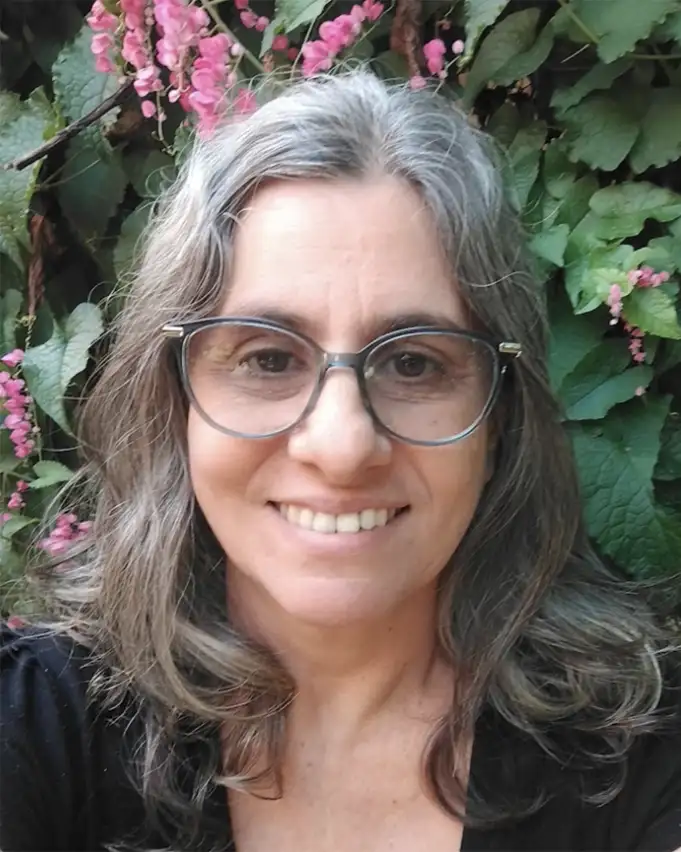
Ermelinda Moutinho Pataca
Professor Ermelinda Moutinho Pataca is Associate Professor in Faculty of Education, University of São Paulo (USP). She holds a bachelor's degree in Chemistry from University of Campinas (UNICAMP), a master's degree and a doctorate in the area of Applied Education to Geosciences by UNICAMP. She did a sandwich doctorate at Universidade Nova de Lisboa (2004), investigating the history of Luso-Brazilian Scientific Travels (1755-1808), a subject covered since the master's degree to free teaching. She did postdoctoral research in the University of Nanterre (Paris X) in Paris. She works in the Degree in Geosciences and Environmental Education in the disciplines of teaching...
Ermelinda Moutinho Pataca
Mini BioProfessor Ermelinda Moutinho Pataca is Associate Professor in Faculty of Education, University of São Paulo (USP). She holds a bachelor's degree in Chemistry from University of Campinas (UNICAMP), a master's degree and a doctorate in the area of Applied Education to Geosciences by UNICAMP. She did a sandwich doctorate at Universidade Nova de Lisboa (2004), investigating the history of Luso-Brazilian Scientific Travels (1755-1808), a subject covered since the master's degree to free teaching. She did postdoctoral research in the University of Nanterre (Paris X) in Paris.
She works in the Degree in Geosciences and Environmental Education in the disciplines of teaching methodology and history of science. She is coordinator of the Museum of Education and Toy (MEB-USP). She is Chairman and coordinator of the School of Education Graduate Committee. Participates in extension projects in curatorship museums, exhibitions and scientific communication. She was editor of the History of Science and Education section at the Revista Brasileira de História da Ciência (Brazilian Journal of History of Science).
Scientific Expeditions in the Portuguese Empire (1755-1808)
At the end of the 18th century, several scientific expeditions were organized in Portugal, bound for its American, African, and Asian colonies. Funded by the Portuguese Crown, these voyages aimed to conduct research on nature and culture, with the ultimate goal of compiling a "Natural History of the Colonies."
This lecture will analyze these "philosophical voyages," highlighting their unique role in shaping the experiences of travelers throughout the Portuguese Colonial Empire during the second half of the 18th century—experiences rooted in the observation of nature and the lived realities of both the travelers and the colonial populations. The lecture will map the sociotechnical networks of relationships between the travelers and local inhabitants, shedding light on the contributions of individuals often rendered invisible in the history of science—such as women, Indigenous peoples, and enslaved individuals—who participated in
scientific activities.
Key analytical parameters will be examined, including the political context, institutions, practices, representations, and the geographical and geological environment. Furthermore, the lecture will explore the continuities and innovations present in the expeditions commissioned by the Ministry of the Navy and Overseas Dominions, which involved four distinct groups of travelers, categorized based on their patterns of mobility and settlement within the colonies.