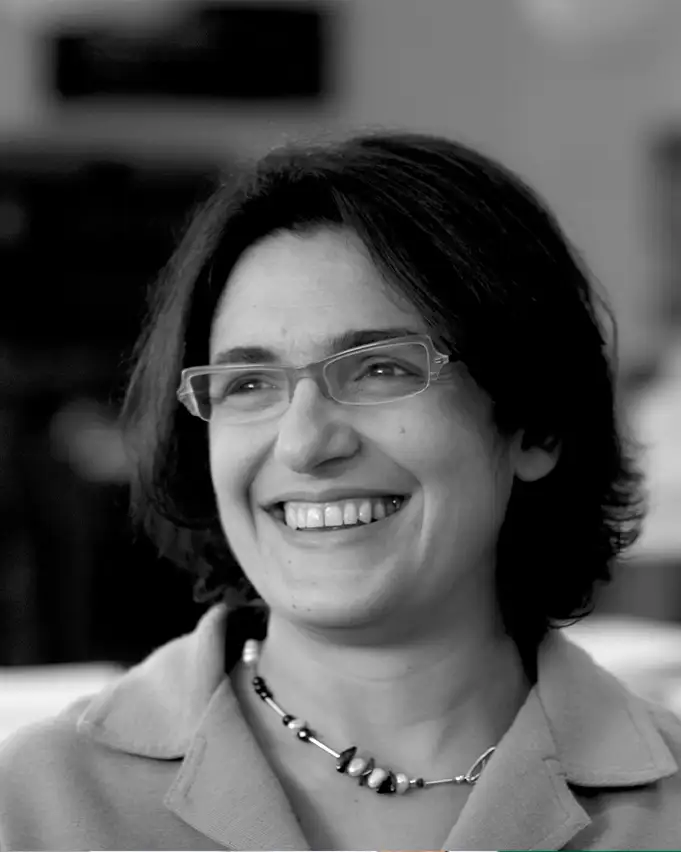
Esther Império Hamburger
Professor of History and Theory of Cinema and Television at the Department of Film, Radio and Television of the School of Communication Arts at the University of São Paulo (USP). Current Vice-director of the Museu de Arte Contemporânea, MAC, USP. Member of Unesco Milid coordination. With a background in social anthropology (Ph.D., University of Chicago, 1999), Professor Hamburger has published in a wide range of journals and book anthologies, including the journals Framework and Television and New Media in the U.S., and Folha de São Paulo newspaper. She published O Brasil atenado, a study of the Brazilian telenovela. Research-in-progress includes expressions of violence, race, and poverty,...
Esther Império Hamburger
Mini BioProfessor of History and Theory of Cinema and Television at the Department of Film, Radio and Television of the School of Communication Arts at the University of São Paulo (USP). Current Vice-director of the Museu de Arte Contemporânea, MAC, USP. Member of Unesco Milid coordination. With a background in social anthropology (Ph.D., University of Chicago, 1999), Professor Hamburger has published in a wide range of journals and book anthologies, including the journals Framework and Television and New Media in the U.S., and Folha de São Paulo newspaper. She published O Brasil atenado, a study of the Brazilian telenovela. Research-in-progress includes expressions of violence, race, and poverty, in contemporary Brazilian film, with an approach that encompasses aesthetic forms, modes of exhibition, and viewer response. This work analyses the ways in which films have come to play a strategic role in the poetic and political expression of the Brazilian social inequality. It does so by tracing interlocutions between certain films, which capture and express different perspectives. Ongoing research on film director Arne Sucksdorff. Currently Researcher of the Advanced Research Institute of the University of São Paulo. She was Tinker Visiting Professor School of the Arts /Ilas Columbia University; Visiting Scholar at DRCLAS Harvard University among others. She directed the CINUSP Paulo Emilio, was coordinator of the Laboratory of Audiovisual Investigation and Critique (LAICA). Research interests include culture industry, criticism, theory, and history of modern and contemporary audiovisual forms, gender relations, television, cinema and digital media. She is a CNPq Fellow.
Issues Regarding AI and Audiovisual Media
Artificial intelligence has been transforming the audiovisual sector in Brazil and worldwide in multiple ways, affecting different stages of the processes of creation, production, distribution, and reception of audiovisual works. Building upon the widespread availability of devices and software capable of capturing, editing, and distributing audiovisual content, AI has expanded the possibilities for image and sound generation, screenplay development, the creation of interactive works, and the analysis of audience behavior on streaming platforms, influencing viewers' choices, habits, and patterns of media consumption.
This scenario reveals a paradox: while devices, software, and platforms that facilitate audiovisual production and circulation have become increasingly accessible, the technological infrastructure that supports AI remains concentrated in the hands of a small number of major corporations. At the same time, there is a growing disparity between the widespread availability of affordable tools for image capture and editing and the significant computational resources required to generate images and sounds using artificial intelligence.
Another challenge lies in the limited understanding of how algorithms that analyze audience preferences and recommend audiovisual content influence the development, selection, funding, and distribution of audiovisual projects. How can we refine methods of film analysis capable of identifying recurring narrative and aesthetic patterns, as well as detecting possible constraints on audiovisual innovation resulting from the growing influence of algorithmic systems?
A further area of inquiry concerns the ways in which AI-driven digital platforms are reshaping the boundaries between public and private spaces. To what extent do these technologies introduce new forms of social regulation? How can democratic models of governance be established for a technology that has the potential to foster significant advances across multiple fields of knowledge while also narrowing access to cultural and creative repertoires through new forms of intellectual property, technological concentration, and national or sectoral barriers?
This conference seeks to explore these and other emerging questions within a dynamic field characterized by rapid technological change and the continual redefinition of its cultural, economic, political, and aesthetic parameters. The presentation will include artistic examples and ongoing research projects developed at the Museum of Contemporary Art of the University of São Paulo (MAC-USP) and the School of Communications and Arts of the University of São Paulo (ECA-USP).