José Augusto Valladares Padua
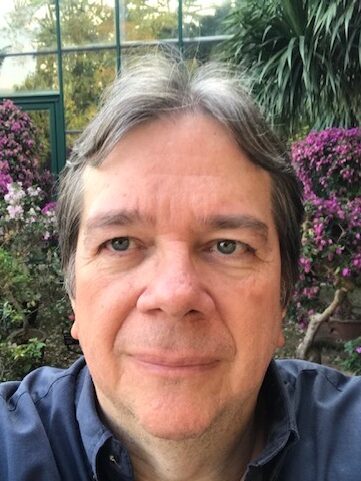
José Augusto Pádua earned a B.A. in History from the Pontifical Catholic University of Rio de Janeiro (1983), an M.A. in Political Science from the University Research Institute of Rio de Janeiro (IUPERJ, 1985), a Ph.D. in Political Science from IUPERJ (1997), and completed postdoctoral research in History at the University of Oxford (2007). He is currently an Associate Professor at the Institute of History of the Federal University of Rio de Janeiro (UFRJ), where he serves as one of the coordinators of the Laboratory of History and Nature. For the 2024–2025 term, he is a member of the Global Faculty at the University of Cologne (Germany). Since 2025, he has served as President of the...
José Augusto Valladares Padua
Mini BioJosé Augusto Pádua earned a B.A. in History from the Pontifical Catholic University of Rio de Janeiro (1983), an M.A. in Political Science from the University Research Institute of Rio de Janeiro (IUPERJ, 1985), a Ph.D. in Political Science from IUPERJ (1997), and completed postdoctoral research in History at the University of Oxford (2007).
He is currently an Associate Professor at the Institute of History of the Federal University of Rio de Janeiro (UFRJ), where he serves as one of the coordinators of the Laboratory of History and Nature. For the 2024–2025 term, he is a member of the Global Faculty at the University of Cologne (Germany). Since 2025, he has served as President of the Latin American and Caribbean Society for Environmental History (SOLCHA). From 2010 to 2015, he was President of the National Association of Graduate Studies and Research in Environment and Society (ANPPAS).
He is a Fellow of the Rachel Carson Center for Environment and Society at Ludwig Maximilian University of Munich. He served on the Advisory Board responsible for the creation of the Museu do Futuro (Museum of Tomorrow) in Rio de Janeiro, where he is currently a member of the Scientific Council. He is also a member of the Editorial Board of Topoi and serves on the Editorial Boards of the journals Ambiente & Sociedade, Environment and History, Ecología Política, História, Ciências, Saúde – Manguinhos, and Revista de História Regional.
As a specialist in environmental history and environmental policy, he has taught courses, delivered lectures, and participated in fieldwork in more than forty countries. His research focuses on History, with an emphasis on Environmental History, particularly in the areas of Brazilian history, territorial history, regional history, the history of forests and agroecosystems, the history of science, the history of ideas about nature, the history of environmental policies, and sustainable development policies.
Brazil in the History of Anthropocene: dilemmas and perspectives
Although the proposal to recognize the Anthropocene as a new epoch in the Earth's geological stratigraphy was not adopted by the International Union of Geological Sciences, the concept has gained increasing prominence as a historical framework in both public debate and scholarly research across a wide range of disciplines. The Anthropocene has filled an important conceptual gap, as traditional notions such as modernity and globalization have proven insufficient to capture the full consequences of the dramatic expansion of humanity's impact on the planet, particularly since the mid-twentieth century.
From the perspective of historical analysis, however, a significant challenge remains: the Anthropocene has been discussed primarily through global datasets and highly aggregated, abstract perspectives. Major historical transformations, however, do not occur simultaneously or uniformly across geographical space. Rather, they unfold in different ways in different places through the interaction of local and international actors and institutions. Moreover, these transformations are not automatic. They spread through both endogenous and exogenous processes, generating conflicts, connections, and forms of resistance.
Historical analysis therefore makes it possible to examine the diverse geographical patterns of the socioeconomic and cultural processes that converged in the making of the Anthropocene as a global phenomenon. The challenge is to connect the macro perspective—the evolving relationship between humanity and the Earth system—with the varied and concrete realities of human societies, exploring how specific regions contributed unequally to the emergence of the Anthropocene and have experienced its consequences in different ways.
This lecture proposes to examine Brazil as an exemplary case, exploring how the country participated in the different phases of the Anthropocene's history. It will also address the opportunities and challenges that Brazil faces in the future of the Anthropocene, taking into account both the country's globally significant ecological resources and the political and diplomatic dilemmas it confronts today.