Maria de Fátima Gomes Costa
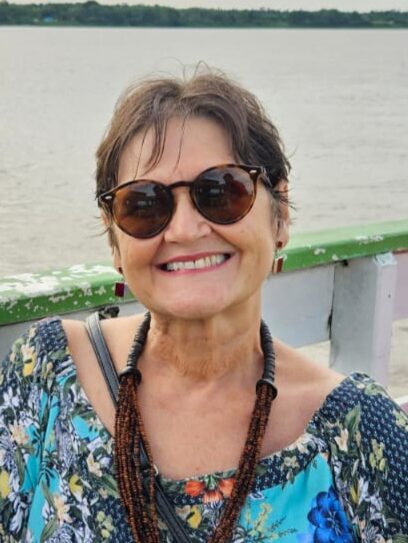
Maria de Fátima Gomes Costa is a historian and Professor Emerita at the Federal University of Mato Grosso. Her research has focused on the scientific expeditions that traveled throughout Brazil during the eighteenth and nineteenth centuries, a subject on which she has published numerous articles and books. She has conducted extensive research and written on Alexandre Rodrigues Ferreira’s Philosophical Journey, the Boundary Demarcation Expeditions, the expedition of Spix and Martius, the Langsdorff Expedition, the Francis de Castelnau Expedition, and the works of traveler-artists such as Johann Moritz Rugendas, A. A. Taunay, and Hercule Florence.
Scientific Journeys and Local Knowledge
During the first half of the nineteenth century, Brazil was visited by scholars and naturalist collectors from various parts of Europe. Whether traveling as members of scientific expeditions or on individual journeys, these visitors sought to collect specimens of fauna, flora, and minerals, as well as objects of material culture and other items, in order to assemble collections for shipment to scientific institutions across the Atlantic.
To accomplish this task, they had to venture into the country's interior, traveling overland or by river to regions that were largely unknown and, in many cases, still unmapped. Under such conditions, scientific travel—regardless of the route taken—was only possible through the support of local populations and the use of their knowledge. It was only with the assistance and collaboration of Africans and Afro-Brazilians, Indigenous peoples, and people of mixed ancestry—whether enslaved, freed, or free—that these visitors were able to travel and carry out their collecting activities.
Organizing overland or riverine caravans required considerable expertise, from selecting pack animals or acquiring canoes to hiring muleteers, drovers, guides, pilots, bowmen, and rowers, among many other specialists. Yet their contributions extended far beyond logistics. These individuals mediated encounters, served as interpreters of languages and customs, and facilitated communication between travelers and local communities. Their empirical knowledge of the natural environment was indispensable in identifying where to find particular specimens and materials, as well as in providing the techniques needed to construct traps for hunting and fishing.
Drawing on travel accounts and documentary sources left by these travelers, this lecture examines how the participation of these local agents—figures who have often remained invisible in the published accounts and outcomes of scientific expeditions—was fundamental to the success of scientific travel, the creation of the remarkable scientific collections now housed in major museums and academies, and, more broadly, the development of European scientific knowledge.